
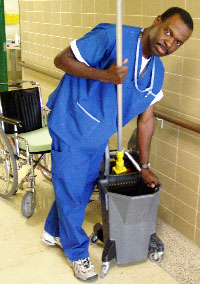
 During my twelve years as CEO of OhioHealth & Riverside Methodist Hospital in Columbus, I often worked alongside employees. One day, I was allowed to help our nursing staff and a physician with the birth of a baby.
Afterward, a member of the housekeeping staff approached me. "What did you think," she asked. "Oh, I think being present at birth is a wonderful honor," I responded. I was still caught in the awe of it all when she gave me a dose of another reality.
"Well," she said with a mischievous smile, "are you ready to help me with my part?" She gestured toward the delivery room. The mother and baby were gone. The doctor and nurses had left. Now it was time for someone to clean up. Predictably, I was filled with revulsion as what I imagined was left in that room. The housekeeper saw this.
"That's what I thought," she said. "Never mind, I'm used to this." She headed off into the room with her mop and pail.
After the drama of surgery, who cleans up? After the delivery is done, who comes to make the room read for the next patient? We kind of know the answer to these questions. But, we don't want to give it too much of our attention because, after all, it's just clean up. Housekeepers see what we think of them in their miserable pay-checks.
The people who clean up have difficult work and low pay. What we can do, at least, is find some time to thank them for their work – to actually stop a housekeeper in the hall and express your appreciation.
I wasn't too sure I wanted to write about this because, all these years later, I still feel guilty that I didn't have the courage to help that housekeeper. I admire her. And I admire all the others like her who clean up when all the "important" work is done.
-Erie Chapman


 Journal of Sacred Work
Leave a reply to Victoria Facey Cancel reply