
Today's meditation was contributed by Cathy Self, Senior Vice President for the Baptist Healing Trust.
Ask most caregivers who and what they must give their attention to and you will likely hear a long, detailed list. It is little wonder that many of us do not believe we can embrace the miracle of five minutes for self-care in the midst of the noise. One caregiver told me she feels pulled in so many directions her sense of direction has been completely lost. Her story reminded me of Leo Tolstoy's (1828-1910) telling of the Emperor's three questions. It will take a few minutes to read through, but perhaps will be a worthy read for you today. It is said Tolstoy did not know the emperor's name…
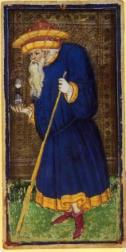 "One day it occurred to a certain emperor that if he only knew the answers to three questions, he would never stray in any matter.
What is the best time to do each thing? Who are the most important people to work with? What is the most important thing to do at all times?
The emperor issued a decree throughout his kingdom announcing that whoever could answer the questions would receive a great reward. Many who read the decree made their way to the palace at once, each person with a different answer. In reply to the first question, one person advised that the emperor make up a thorough time schedule, consecrating every hour, day, month, and year for certain tasks and then follow the schedule to the letter. Only then could he hope to do every task at the right time. Another person replied that it was impossible to plan in advance and that the emperor should put all vain amusements aside and remain attentive to everything in order to know what to do at what time. Someone else said that certain matters required immediate decision and could not wait for consultation, but if he wanted to know in advance what was going to happen he should consult magicians and soothsayers.
The response to the second question also lacked accord. One person said that the emperor needed to place all his trust in administrators, another urged reliance on priests and monks, while others recommended physicians. Still others put their faith in warriors. The third question drew a similiar variety of answers. Some said science was the most important pursuit. Others insisted on religion. Yet others claimed the most important thing was military skill. The emperor was not pleased with any of the answers, and no reward was given.
After several nights of reflection, the emperor resolved to visit a hermit who lived up on the mountain and was said to be an enlightened man. The emperor wished to find the hermit to ask him the three questions, though he knew the hermit never left the mountains and was known to receive only the poor, refusing to have anything to do with persons of wealth or power. So the emperor disguised himself as a simple peasant and ordered his attendants to wait for him at the foot of the mountain while he climbed the slope alone to seek the hermit.
Reaching the holy man's dwelling place, the emperor found the hermit digging a garden in front of his hut….The labor was obviously hard on him….The emperor approached him and said, 'I have come to ask your help with three questions: When is the best time to do each thing? Who are the most important people to work with? What is the most important thing to do at all times?' The hermit listened attentively but only patted the emperor on the shoulder and continued digging. The emperor said, 'You must be tired. Here, let me give you a hand with that.' The hermit thanked him, handed the emperor the spade, and then sat down on the ground to rest…One hour passed, then two. Finally, the sun began to set behind the mountain. The emperor put down the spade and said to the hermit, 'I came here to ask if you could answer my three questions. But if you can't give me any answer, please let know so that I can get on my way home.'"
Tolstoy continues on, telling of the sudden appearance just then of a man, wounded and bleeding from a deep gash. Together the emperor and the hermit cared for the stranger and they all fell into a deep and heavy sleep. Waking the next morning, the emperor looed to the wounded man who stared at him intently and whispered "Please forgive me." The story unfolds as the stranger tells of his resolve to take venegance on the emperor for the loss of his family and property at the hand of the emperor's last war. Seeking to kill the emperor, the stranger was instead caught and wounded by the emperor's attendants at the foot of the mountain. He then said "Luckily I escaped and ran here. If I hadn't met you I would surely be dead by now. I had intended to kill you, but instead you saved my life!…Please grant me your forgiveness." Reconciled and promising to make amends, the emperor sends the stranger back home guided and helped by his own attendants. Before returning to his palace, the emperor sought out the hermit for one last try to find answers to his three questions.
"The hermit stood up and looked at the emperor….'your questions have already been answered.' 'How's that?' the emperor asked, puzzled. 'Yesterday, if you had not taken pity on my age and given me a hand with digging these beds, you would have been attacked by that man on your way home….Therefore the most important time was the time you were digging in the beds, the most important person was myself, and the most important pursuit was to help me. Later, when the wounded man ran up here, the most important time was the time you spent dressing his wound, for if you had not cared for him he would have died and you would have lost the chance to be reconciled with him. Likewise, he was the most important person, and the most important pursuit was taking care of his wound. Remember that there is only one important time and that is now. The present moment is the only time over which we have dominion. The most important person is always the person you are with, who is right before you, for who knows if you will have dealings with any other person in the future? The most important pursuit is making the person standing at your side happy, for that alone is the pursuit of life."
Thich Nhat Hanh, a Vietnamese Buhddist monk, has written "it is the very people around us that we must live for first of all. Are we working for other humans, or are we just working for the name of an organization?" Seems like a pretty good question to me. Perhaps there are really four wondrous questions, and the answers are there, right in front of us, living in Love.


Leave a Reply