
 "In solitude, we become aware that our worth is not the same as our usefulness." – Henri Nouwen
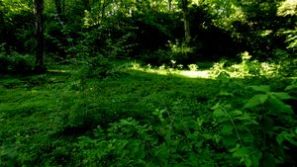
The fences we construct have a use. A forest glade grows as a natural occurence. It's beauty does not "perform." Yet, its value is beyond measure.
In hospitals, nursing homes, and our actual home, we may well be valued for what we can do. I confess that I have spent most of life believing that if I was not useful, I was worthless.
In my imprisoning world view, meaning was achieved only through performance. I did not understand (and still find it hard to accept) that if we see ourselves only in this way, we have betrayed God's gift of Love in our lives. For we have dignity and worth quite apart from our usefulness.
The 17th century monk, Brother Lawrence, increased his understanding of God through a sacred practice. "I began to live as if there was none but God and I in the world," he wrote.
This solitary discovery came, involuntarily, to my friend Rhonda Swanson. I have shared her story before and it's power reappears as an example of Brother's Lawrence's life path.
In the lowest moments of her agony and exhaustion following a hard blast of chemotherapy Rhonda made a discovery. "Down there, I realized there was no one else but God and me," she told me later.
In this forced form of solitude, Rhonda discovered her worth. It didn't matter what she could do. She realized that God was with her regardless of her "usefulness."
 How does any of this help us in caregiving or in self-care? Nowen wrote that, "…to care means first of all to be present to each other."
Offering presence can feel like an effort to be useful. But, being present, leaning into the heartful silence that can bless an encounter with another, affirms usefulness and worth simultaneously.
You offer care from the wellspring of your goodness. In solitude we may come to know that we are loved only because, like the forest glade, we live.
-Reverend Erie Chapman
photos copyright Erie Chapman 2011


 Journal of Sacred Work
Leave a comment