
Why has the image of Christ on the cross enchanted billions? After all, this is the image of a suffering being.
What was his pain and how does it affect us? We are not bleeding on that cross. Or are we?
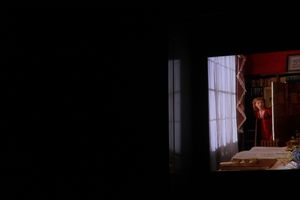 The answer swirls in the room that holds our darkest memories. Only by opening that door can we free their hold on us.
"To live a spiritual life we must first find the courage to enter into the desert of our loneliness and to change it by gentle and persistent efforts into a garden of solitude," Henri Nouwen writes in Reaching Out.
The first time I chose (through a solitary retreat) to enter this desert was in 1997. I could not tolerate the suffering and raced to escape.
As a result, my subconscious pain – what Eckhardt Tolle calls "the pain body" – remained unresolved. I feared further retreats.
My ego grew larger. My spirit faded.
Fortunately, the difference between ego and being finally emerged. On the heels of that came the discovery of the contrast between loneliness and solitude.
The lonely heart is vulnerable to self-pity. It dwells on the myriad "slings and arrows" our ego has imagined.
Our ego gorges on such stuff and seeks more.
In solitude, Nouwen writes, we move from "the restless senses to the restful spirit, from outward-reaching cravings to the inward-reaching search…"
How do we change?
Eckhardt Tolle's latest book, A New Age, offers an answer. The primary step in escaping ego's pain is to look into that dark room and recognize those memories are not us.
Simply saying, "I guess I'm being egocentric" or accusing another of egomania is, itself, an act of the ego.
"Confessions" may be made to win compliments. Accusing others of egocentrism is a way of absolving ourselves. In both cases, the ego wins.
Interestingly, Tolle points out that egocentricity is not determined by extroversion or introversion. The weight falls equally.
When I step back and observe that my ego is guiding my thinking I am separating myself from that hungry force. I am letting go of the "pain-body" of leaden memories and entering the "pristine present."
This transforming idea is both challenging and exhilarating. "The ego takes everything personally," Tolle writes. What a freeing statement.
For caregivers (and all of us) the successful transit from ego to spirituality enables freedom from loneliness. In its place, comes a spirit that flourishes in greater peace.
In the vortex of loneliness, we feed fears that poison our hearts and the lives of others.
In the garden of solitude, Love flowers both for us and for all beings we encounter.
-Reverend Erie Chapman
Mixed Media Image: "Woman at Door" copyright erie chapman 2012
Word-Photograph: "The long Cairo evenings. The sea of night sky, hawks in rows until they are released at dusk, arcing towards the last colour of the desert. A unison of performance like a handful of thrown seed." - Michael Ondaatje, The English Patient


 Journal of Sacred Work
Leave a comment