
There is a reason hospitals and courtrooms are the stages for so many movies and t.v. shows. Drama. Drama built from memories of childhood and from careers of caregiving for those in deep need.
 I. SLICES OF SUNLIGHT
From early childhood on, memories illuminate the present. David Whyte wrote, “…memory [determines] how we live the story we have inherited.”
What childhood recollections help you today? Here is one of my earliest:
At age 3 I drowsed through naps who’s light, smells & sounds flicker today. Because those and other memories are sweet they are hand-painted films that play to the rhythmic clicking of my father’s 16 mm film projector, the thrum of single engine WWII planes soloing toward the Pacific, the splash of Mr. Scott’s garden hose washing his driveway.
But it is the light of those childhood naps, not the sounds, that shine my life 75 years later. And memory always seeks sunnier rooms when meaner moments appear.
Today, my soul dwells in a long ago bedroom where the floor is lines with neatly cut slices of light carved by Venetian blinds, angles toss dust motes, my mother turns the pages of books in which she colored dreams for me.
I was lucky…and still am. But memories can, obviously, trouble the present. Often, the hardest memories can trigger changes that create better lives for others.
This is not a rehash of old news. It is a call to communities to recognize that hospitals need leaders that celebrate caregivers, not the bottom line. When it is the other way around, many suffer.
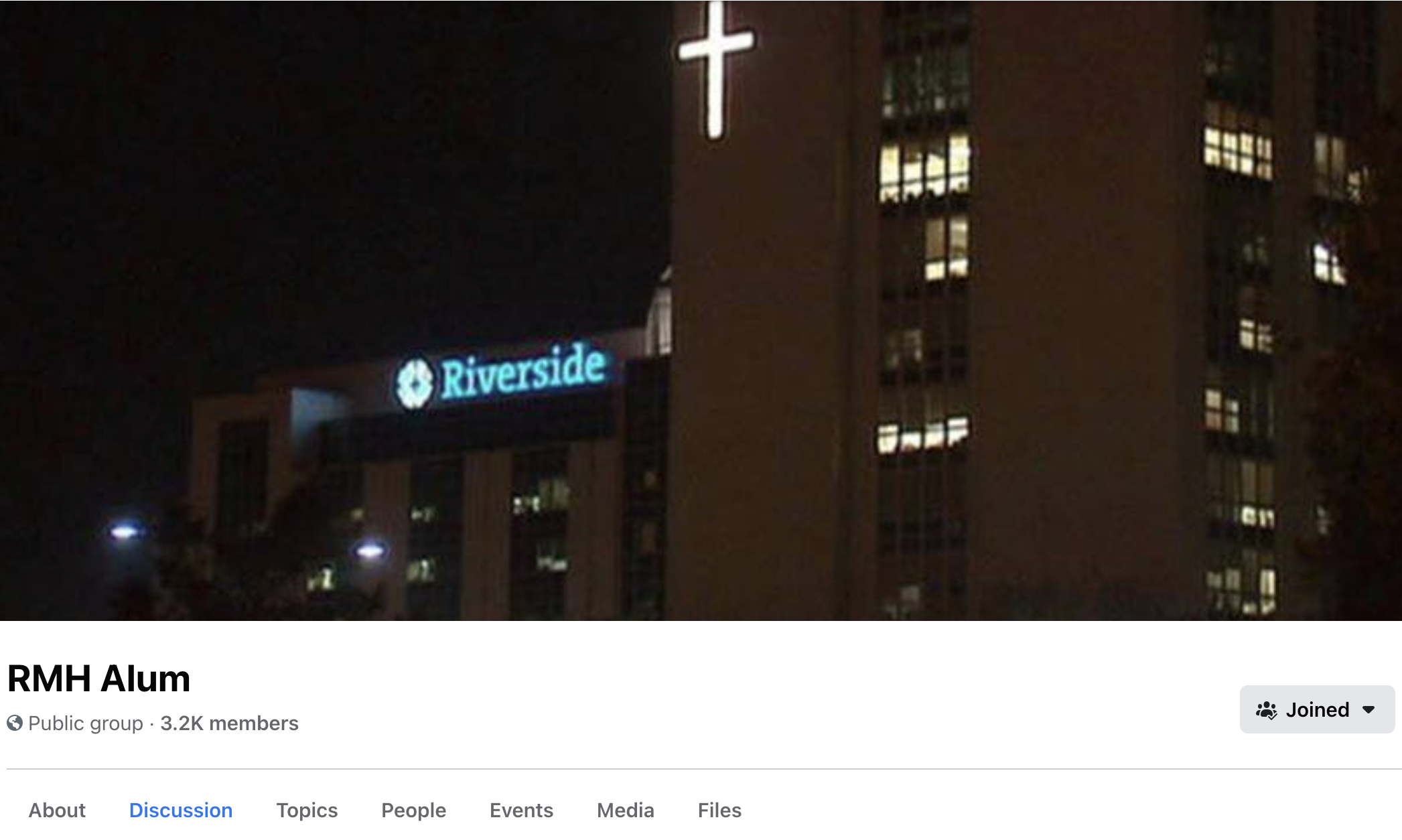
The RMH Alum Facebook page has been life-changing in awakening memories that matter. It triggered recollections of moments that mattered
Whyte says, “…memory creates and influences what is about to happen…” Regardless of where you work, remember to pay attention when leadership changes
II. A FORSHADOWING
One day in 1990, the late Jack Chester and I had a chilling discussion in the lobby that welcomed people to Riverside Hospital (A display honors him in the current lobby.) Jack was a prominent divorce lawyer and key board member at Riverside and OhioHealth while I was CEO of one & founding President of the other.
Importantly, board members like Mr. Chester, not doctors or first line caregivers, choose and remove CEOs.
“Things are going great here,” Jack told me on that fateful day. “Why?”
“Our culture. It’s based on love,” I answered.
“You can’t measure that!” he pronounced in his naturally argumentative lawyer’s voice. “What can’t be measured doesn’t matter.”
“How much do you love your kids?” I asked.
“A lot, of course.”
“But how much? Can you measure that?”
“Of course not,” he laughed. He did not agree or did not understand. As one myself, I know how hard it is to convince lawyers.
“What cannot be measured matters most,” I told Jack.
“Okay,” he muttered. “Well, whatever you’re doing keep it up.”
“Thanks,” I said.
But as I walked away, a shiver ran through me. A key leader did not accept love’s meaning in "the caregiving business." Was the shiver from an Old Testament prophet whispering: “Beware”?
In 1995 Jack Chester, the one who's image decorates the entrance to a special hospital, the one who dismissed Love as unmeasurable, measured out the plank for me and got others to make me walk it. His action caused others to walk it as well.
Or did he? Maybe I was at fault, a victim of naiveté or vanity. Maybe, after twelve years, it really was time for a change. Anyway, many other lives changed after that day.
III. IT'S ALL ABOUT THE CAREGIVERS
Those negatively affected by the leadership change did not deserve the fallout. This includes leaders pushed to leave, those laid off and those who, in staying, faced a sharp culture change in their workplace.
That is because the removal of any key leader jars an organization more than most foresee.
As people bid me goodbye in 1995 I could tell some thought; "It's not me that has to leave," or "This change won't matter."
I knew they were mistaken.
The successors took a different path. I did not agree but that does not mean it was wrong.
Once again, this is not about me. I was simply a catalyst for a certain kind of success. New leaders caused new changes with other results.
Good leaders hire good people that create cultures of caring. Bad leaders do the opposite. The vast group in between is colored gray.
People go to hospitals out of deep need. That is why hospital leadership matters.
Who matters most to patients? No patient entering the ER ever asks, "Have you got enough executives here?"
Because Riverside can be a proxy for how any organization is led, this series will continue. Bless you who continue to enrich the legacy of loving care regardless of your leader.
Meanwhile, I'm an old man now and get to take naps. The kind where I can drowse through a summer afternoon the way I did as a child: watching the way Venetian blinds carve sunlight into slices that paint beauty on the floor. And I can savor the memory of the privilege of having helped lead, nurture & create a better life for thousands of the world's best caregivers…and the patients we served.
-Erie Chapman


 Journal of Sacred Work
Leave a reply to Kathy Grannan Cancel reply