
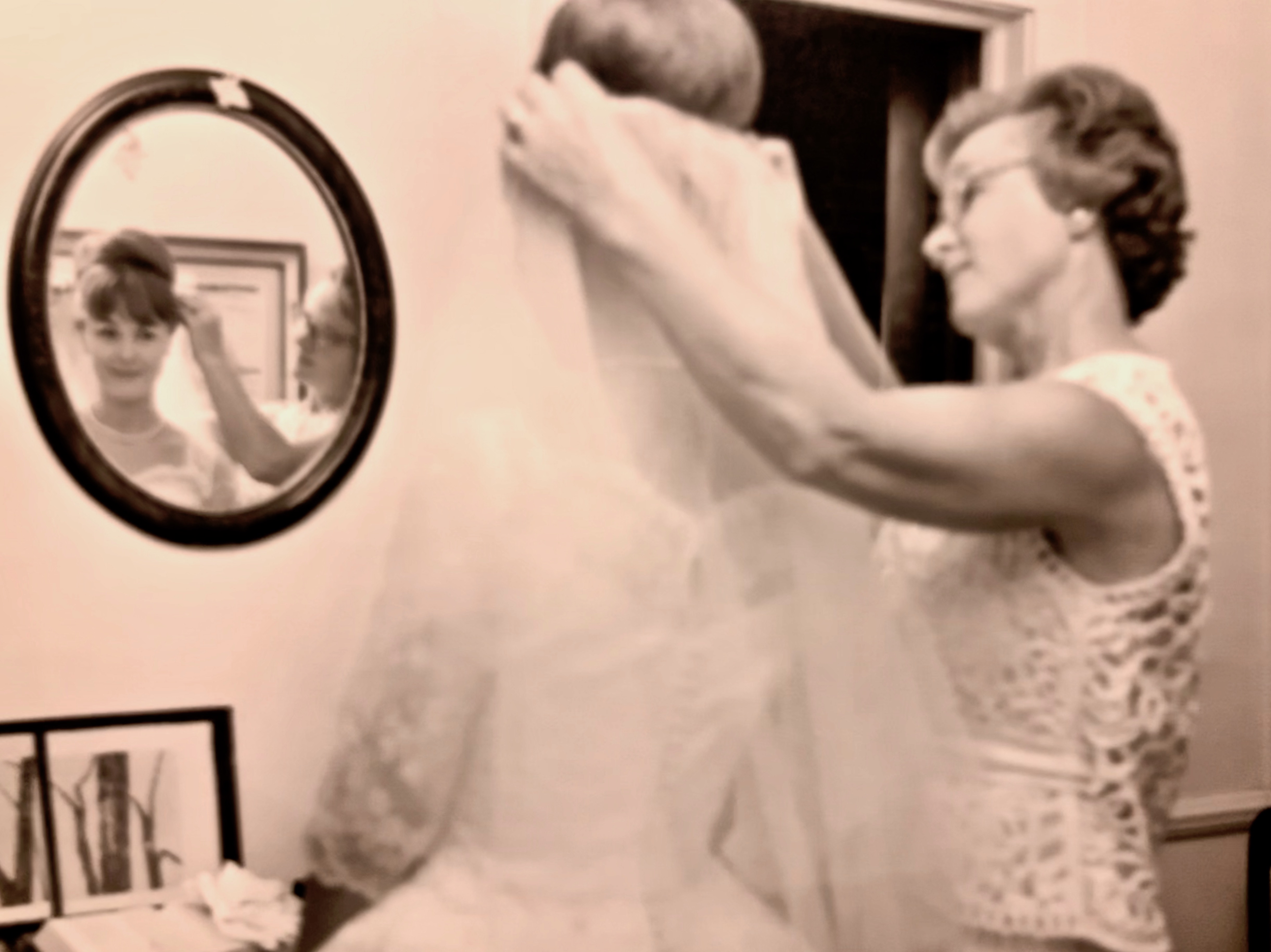
 The title quote is from my saintly, mother-in-law, Marian Lokvam.* As a hyper-visual "see-er" that line became a favorite. I did not have to own a field of flowers to smell them or a car to enjoy riding in it.
Is seeing enough or do we have to "own"? When we own, what do we have actually have?
The power in Marian's comment arises when we ask more deeply: What do we own? And its companion suggestion that maybe we never really own anything or anyone; that the very idea of "pride of ownership" triggers murders, wars and personal agony.
Look at our ownership language: My house. My car. My job.
Of people: My wife. My children. My sister. My friends.
What happened to "my" mother, you first-borns, when the your sibling arrived?
In a hospital, "My nurses" sounds different depending on whether it is spoken by a nursing director or a patient.
When I disagree with a doctor's recommendation I am always surprised when they say, "Well. It's your body." Were they subconsciously thinking my body was theirs?
Why did the feminist movement gain traction with the phrase "It's My Body"? Because my fellow males so often abused women's rights that consciousness needed to be raised and laws changed.
Ownership requires at least two adjectives: "privilege and permission." I never really owned any "thing" or "person." I was simply granted privileges and permissions for some period.
So long as I thought too literally that Tyler and Tia were MY children, their successes and failures became "mine." Marian's enlightened "owning-by-seeing" frees up healthier relationships. It sends jus again, and always for the first time, to Kahlil Gibran's oft-stated and rarely followed wisdom, quoted in part:
Your children are not your children.
They are the sons and daughters of Life’s longing for itself.
They come through you but not from you,
And though they are with you yet they belong not to you.
You may give them your love but not your thoughts,
For they have their own thoughts.
You may house their bodies but not their souls,
For their souls dwell in the house of tomorrow,
which you cannot visit, not even in your dreams.
You may strive to be like them,
but seek not to make them like you…
-Erie Chapman
P.S. Since writing this a thief named Covid stole "my" sense of smell and should return it, right?
Photo: Marian Lokvam, at right, helping Kirsten on our wedding day – 1966


 Journal of Sacred Work
Leave a reply to Liz Wessel Cancel reply