Spirituality means waking up. Most people, even though they don’t know it, are asleep. – Father Antony de Mello
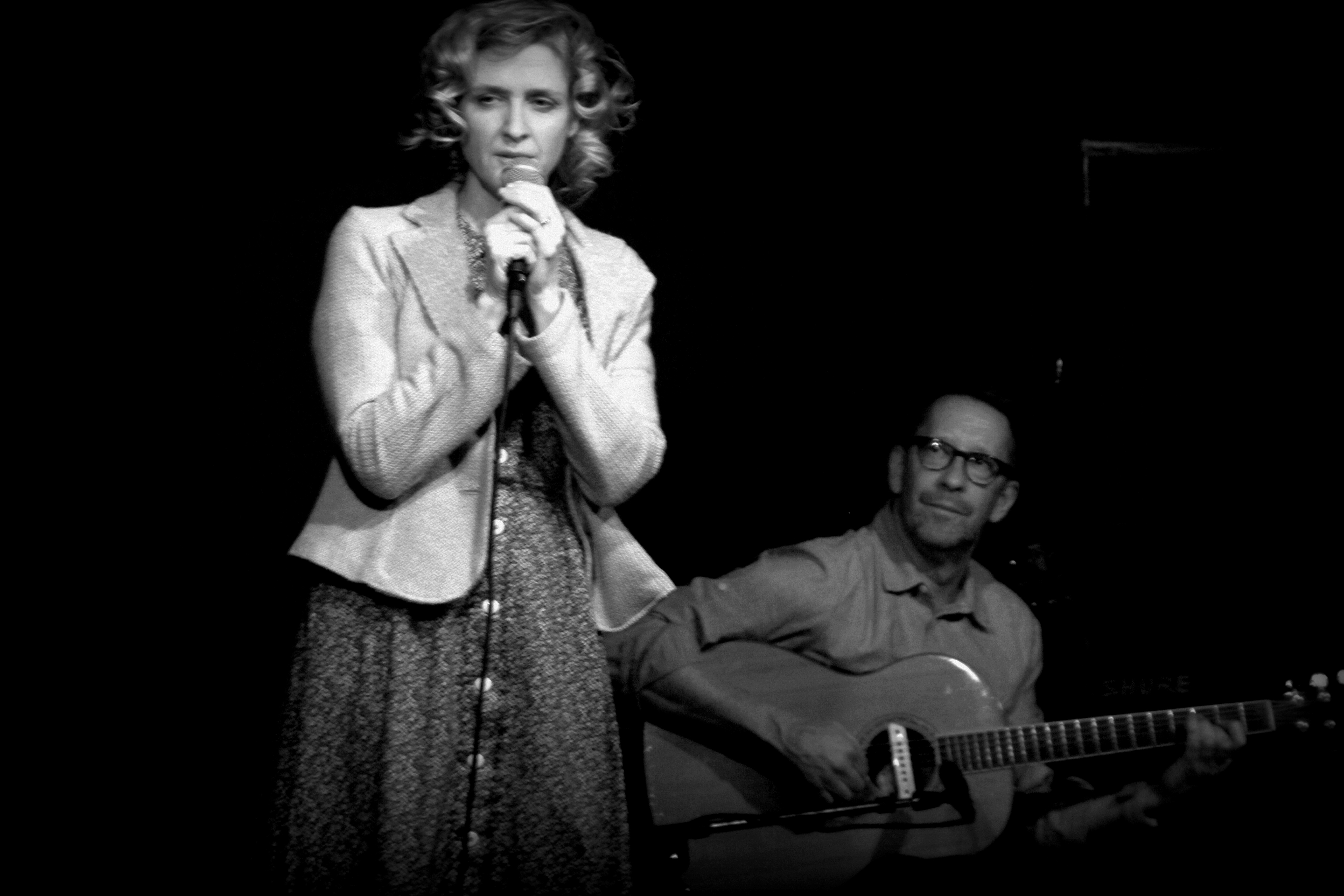

Minton and john - Station Inn copyright erie chapman 2013 bw          
One of the sweetest experiences you had as a child probably began with four magic words: "Once upon a time…" It was so exciting for me that I even remember the way the "O" in the first word appeared large on the pages of the story books my mother opened before me.
          Since your childhood, imagine how many stories you have heard and told. Award winning spoken word artist Minton Sparks (left) tells her stories so well they have universal appeal, reminding us of how stories shape our lives.
   
          Dozens if not hundreds of stories fill your days because your take on the world is shaped by the stories you tell yourself. For example, do you wake up telling yourself the story that you don't like your job, or that your boss is a jerk, or that you would be happy if only you had a new car? 
          The stories we tell signal what we value. If we want to change our world view, we need to look at the stories we are telling ourselves and others.
          Rami Shapiro wrote in the book Hasidic Tales, “The stories we tell ourselves about
ourselves determine the quality of the selves we imagine we are. The stories we
tell about others determine the quality of our relationships with them.” 
          One of the most successful ideas that have emerged in the teaching of Radical Loving Care is what I call The Mother Test. This test helps wake up
leaders and first line staff spiritually by giving them a tough challenge. The idea for it arose from an encounter that is now an important story. 

    The Mother Test:
If your mother were a patient in your organization, would every single person give her the loving care you think she
deserves?

          Most people skip over the
definition of The Mother Test too fast. Yes, it is a variation on the Golden
Rule. But in a complex caregiving setting, what does it mean to treat every patient the way you want your
mother to be treated?

          An orthopedic surgeon signaled the
difficultly in understanding the importance of loving care during a discussion
we had in a hospital I was leading. “This loving care stuff is nice,” he told
me, “but if a patient comes to me with a compound com-minuted fracture of the
tibia how does that help? The leg doesn’t need loving care. It needs my skill.”

          “The leg is attached to the patient
and the patient needs loving care,” I answered.

          He seemed unimpressed. This talented physician could
not see the point until I took the discussion one step further.

          “What if the patient is your
mother,” I asked.

          His response suggested an
earthquake change in his the story he told himself about his own caregiving. “Oh, well,” he said, clearly startled, “if it was my mother then I would certainly want
her to receive all the love in the world.”

          The Mother Test was born in that moment.
Every patient is someone’s mother, father, sister, brother, child, friend.
Every patient’s humanity calls for love.

         But, can hospitals ensure this kind
of love from every caregiver all the time? The answer is that all of
us are inclined to conform to the culture in which we live and work.

          On the first day of kindergarten,
we all look around to determine how we are supposed to behave. We take our
clues from the teacher and our fellow classmates and act accordingly.

          Caregivers new to their environment
do the same thing. They look around at their new work setting and observe their
teammates. If the culture tolerates mediocre care, it can be hard to sustain a
personal standard of best care because your teammates are likely to give you a
hard time.

          It is the responsibility of leader to establish environments where loving care is celebrated not frustrated. After all, the leader never knows when his or her mother may need Radical Loving Care.

-Erie Chapman

4 responses to “Days 45-46 – Why Storytelling is Important”

  1. ~liz Wessel Avatar

    What really strikes me about today’s enlightening essay is calling out the leaders responsibility to create the environment of RLC to flourish. The Mother test is indeed a tough challenge; “from every caregiver…all the time.” Surely, worth aspiring to each and every day…Thank you, Erie, and congratulations for what you were able to create during your distinguished career in healthcare.

    Like

  2. Stephanie Avatar
    Stephanie

    As I teach nursing, I often start my lectures or short teaches in the skills lab with a story. I learned this from another teacher when I was learning how to teach; I noticed that when he started a post with a story my heart woke up and I was instantly engaged. My hope is that with each story that I tell nursing students about an experience with a patient that their hearts will wake up too, they will, for a moment, be transported there with me to the the bedside and live radical loving care through being with my patient. I do see their eyes light up; they lean forward, and often hands shoot up with comments and questions. I also appreciate your emphasis, Erie, on how important the stories are that we tell ourselves. Our personal vision really does affect those we encounter!

    Like

  3. xavier espinosa Avatar

    When I was a child growing up I was treated in a special way by my grandmother because I was the only son of the favorite son. This left me open to criticism from many of my cousins, the majority of them ten or more years older than me.
    Among them I was referred to as “the prince”. To combat these barbs my mother, wise even then, would hold me in her arms at nap time sitting in this rocker that back then looked enormous, and would make up these wonderful stories about the adventures of the Moorish Prince. Many of the details of the stories elude me now, but the prince traveled to distant lands riding on the back of a large tiger accompanied by an eagle that perched on the tail of the tiger.
    Through these stories I learned how important it was to be kind, to share, to care about others and more than anything else, the importance of respect.
    One’s culture is one that is learned sitting on our mother’s knee. It is the tenderness that is conveyed in these golden moments that shapes our capacity to share, to love and to be able to be reciprocal to others attention.
    During my time working with patients, I realized that the one thing that I could provide to the healing was the gift of time. Listening to patients interpretation of their illness and the characteristics of the dis-ease that enveloped them allowed me to participate with the clinical caregivers plan of care. By understanding the stories that our patients had conjured up about their illness and its processes we could work together to consistently give the same message- “We’re all in this together”. By eliminating the mystery, we abated the fear. Meeting the fear head on gave the spectre of negativity no choice but to retreat to that dark place where it hides from the bright light of the healing.
    Recently my mother told me: “We are all born children of God. Each one with a mission: to be a saint. Every saint has its purpose. It is not for us to criticize each other’s work, but to show respect as we would to any saint. In the end, it is God who will decide if we’ve fulfilled our mission.”
    We all have a story to tell; as we all have our purpose. Whether we are saints, healers, story tellers or witnesses, we all want to be heard. And to this day I know that hearing is believing.

    Like

  4. Erie Chapman Foundation Avatar

    Thank you so much Liz, Stephanie, and Xavier
    Stephanie, thank you for the way you incorporate storytelling in your teaching.
    Xavier, your carefully told story of your recollections of childhood storytelling is very powerful. Thak you for writing that, “Meeting the fear head on gave the spectre of negativity no choice but to retreat to that dark place where it hides from the bright light of the healing.”

    Like

Leave a comment