
Note: Guest essay by Xavier Espinosa
Off my mother’s kitchen is a sun room that is washed in
sunlight thanks to two skylights. In
this room sits a rocker, which I remember from my childhood, three bird cages
housing parrots and love birds, a bookshelf filled with newspapers, and a wall
that serves as a gallery space for artwork drawn by her grandchildren, who are
now young adults and teenagers. Here my
mother spends the better part of the morning reading the latest news and catching
up on gossip magazines and arguing with the parrots who screech for her
attention. Among the artwork pinned to
the wall is a family portrait drawn by my niece.

The portrait shows my mother and my sister’s family smiling
and happily running across a landscape.
My mother holds leashes with her two dogs at the time and is followed by
the family, husband, mother, eldest son, the daughter artist, the youngest girl
followed by the family dog, one of their birds and peeking from the corner of
the portrait their cat, which was never really social but bears mention because
she was part of their home.
What is
remarkable about this portrait is that it was drawn during the time when my sister
was diagnosed with breast cancer. Her depiction
shows her wearing a scarf on her head that she wore to disguise the effects of
the chemotherapy. It was a frightening
time for everyone; the disease caught all of us by surprise and was the first
true illness that any of us had to deal with.
Added to that was the idea of mortality and leaving three children under
the age of ten open to disparate ideas of what cancer was and how it was
treated.
To the far right of the
portrait my niece drew a flowering tree; a hope of spring.
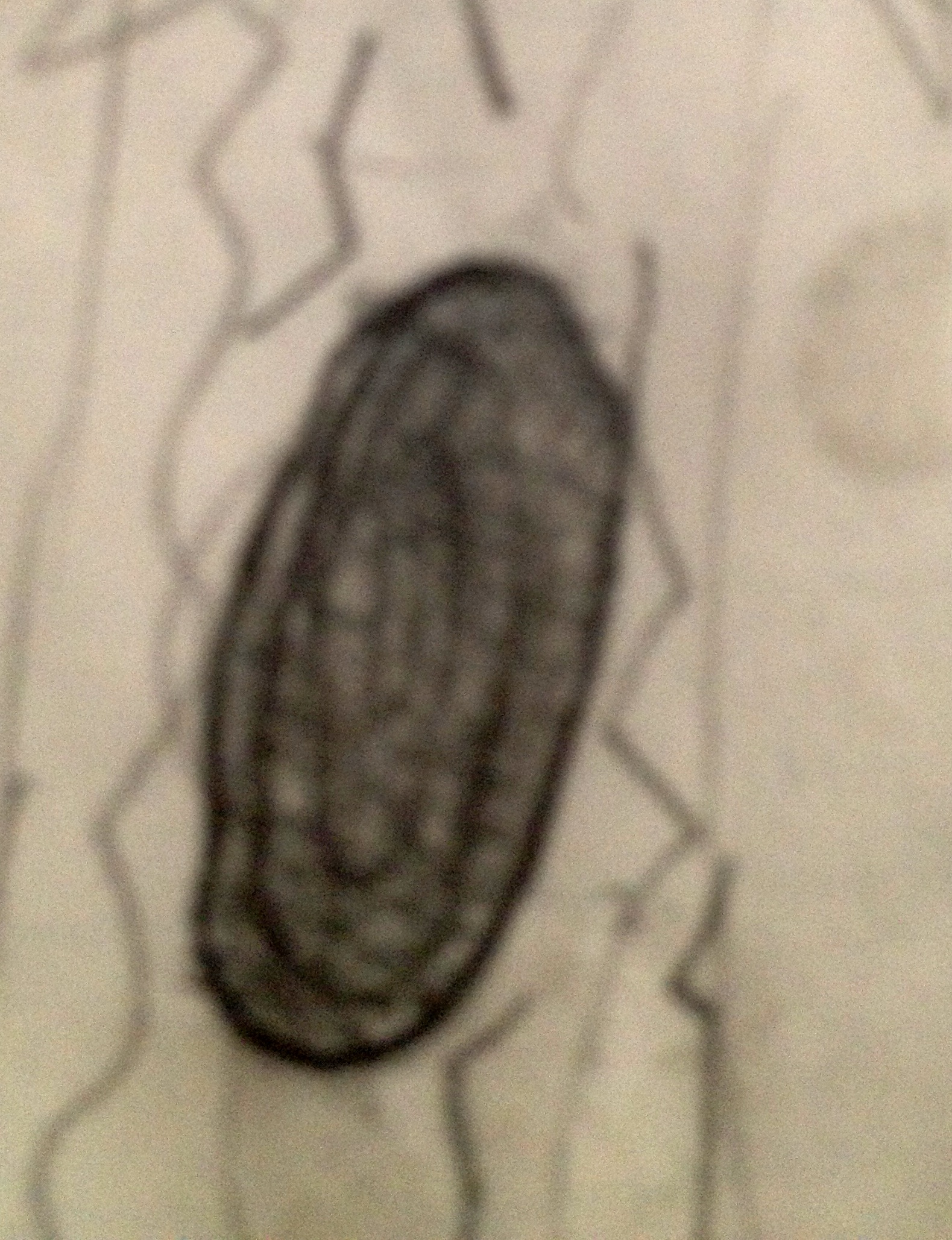 In the middle of the trunk she drew a
knothole and filled it in with scribbling.
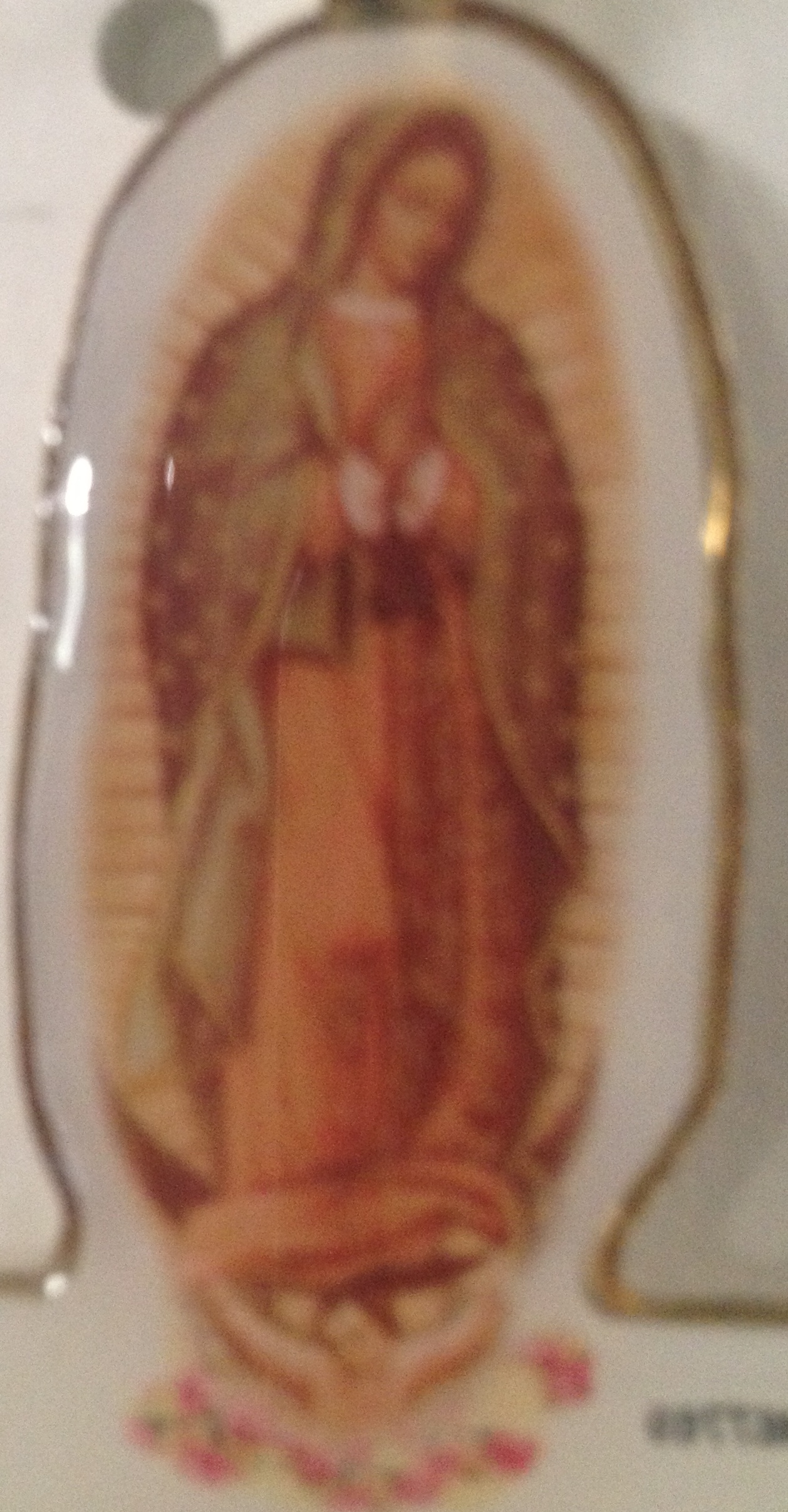
It was my mother who noticed that the knothole contained a very clear depiction
of Our Lady of Guadalupe, who to Latin America represents hope and
promise.
The idea that a small child
unknowingly would include this as part of her drawing gave my mother great
comfort that my sister would beat the disease and be able to care for her
family. Thankfully she did.
Radical Loving Care is ripe ground for accepting the promise
of healing as interpreted by our patients.
Not everyone is a scientist or adept at medical processes or able to do
internet searches to become more knowledgeable about their disease
processes. But all of us have hope and
some a deeper faith that is more relevant than any study results or outcome
reports. As caregivers are we able to
open up and understand our patients and family’s resistance to prognosis and
diagnosis and lend ourselves a little to the mystery of faith?
Are we able to rejoice in the miracle
that becomes evident with even the smallest advances of healing? A prayer can be answered and a disease can be
beaten. Its success can be foretold by a child’s drawing and contained in the most
innocuous of places- like a knot hole in a tree.
-Xavier Espinosa
A special thank you to Xavier
Espinosa for sharing this expansive story that now bestows a blessing upon each
of us.


 Journal of Sacred Work
Leave a reply to Jhon Dosi Cancel reply