
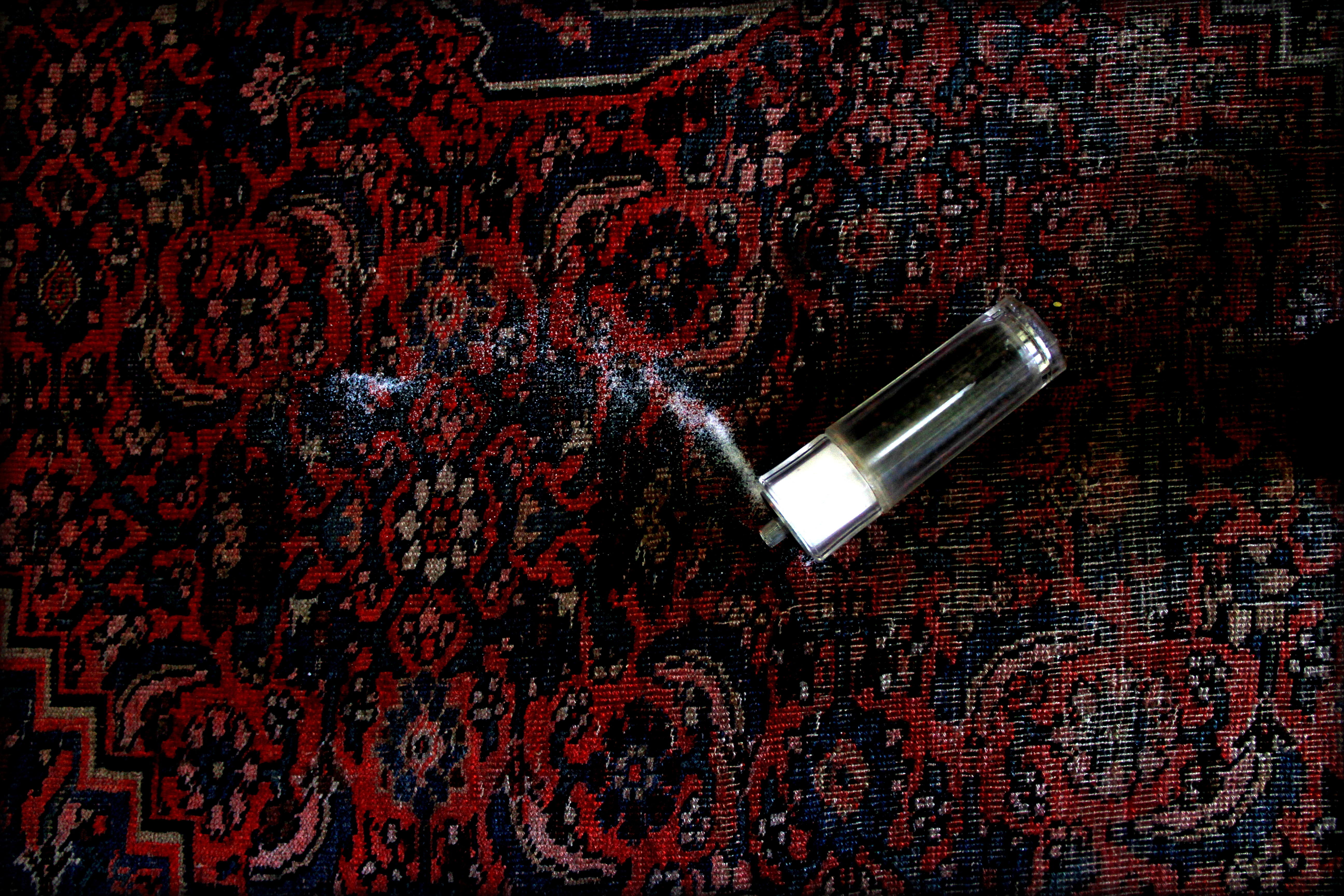
 The subject is nothing grand. It is just a salt shaker that fell from my hand, fanning his grains onto an oriental carpet my grandfather bought a century ago.
The literal mind sees a dropped object that has caused a mess. Your sacred eyes, on the other hand, can see art in such tiny occurrences.
These moments are nothing and everything. Such images can be the stuff of paintings or poems. They can ignite a song or an idea for a film.
Isn't it stunning how ordinary things can be experienced as pathways to hidden Beauty? Flowers hold obvious Beauty. How can other everyday objects become "flowers"?
In the last hours of his life, Pierre-Auguste Renoir, a paint brush lashed to his arthritic hand, struggled once again to paint an anemone. He used his final breaths to say four words, "Today I learned something."
Renoir knew that it was the everyday things in life, whether the color in a flower or the light on one of his nudes, that provide the stuff of art. Your life and your work hold so many transactional moments. If you never see Beauty in the ordinary your life may become flooded with the kind of boredom that leads to burnout.
Your energy goes where your attention flows. If you look through your sacred lens how would your caregiving be enriched? If you see your relationships as sacred rather than profane what would happen in your encounters?
I sometimes quote a famous poem that some find powerful and others see as pointless. It was penned by poet William Carlos Williams, M.D., a practicing physician who saw with sacred eyes.
- so much depends
upon
- a red wheel
barrow
- glazed with rain
water
- beside the white
chickens
So much depends upon your choice to see with sacred eyes.
-Erie Chapman
Photograph: "Fallen Salt Shaker" – copyright erie chapman 2013


 Journal of Sacred Work
Leave a reply to ~liz Cancel reply