“In the different voice of women lies the truth of an ethic of care, the tie between relationship and responsibility, and the origins of aggression in the failure of connection.” – Carol Gilligan
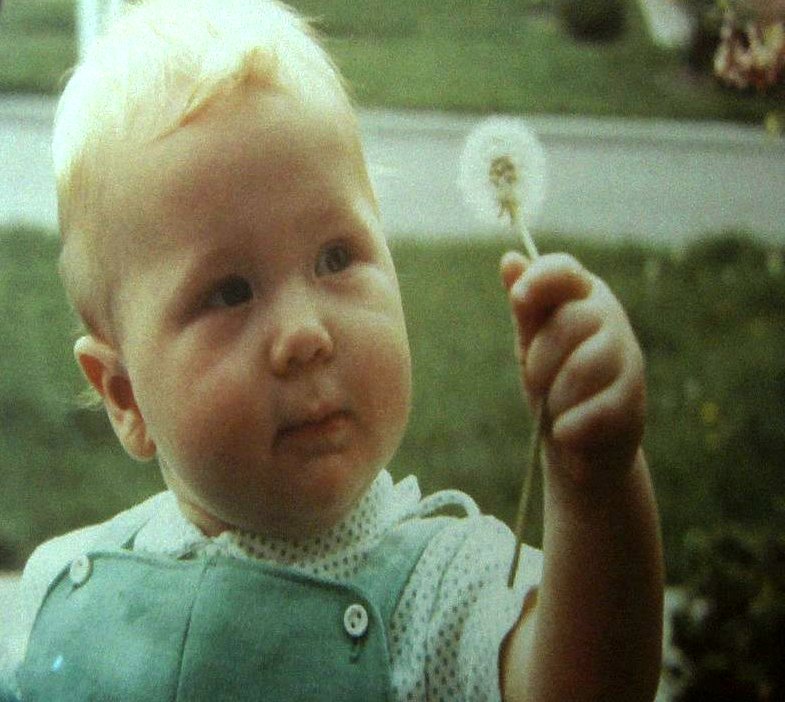
Tyler - dandelion   The United Airlines flight was gearing up for departure. I buckled up my seat-belt and carefully cradled my then six month old son (left) in my lap. 

   The voice of the flight attendant intoned the usual instructions about seats forward and tray tables in the upright and locked position. I tuned her out until she said, "Should the plane lose altitude suddenly oxygen masks will drop down…"

   I thought, "Well, obviously, she will say put the mask on your baby first."

   Of course, I would have been wrong. You put the mask on yourself first. You cannot help your baby if you are passed out.

   Caregivers are terrible at self-care. Part of the reason is that they mistakenly think that caregiving means an unrelenting sacrifice of the self.

   Noted women's rights authority Carol Gilligan warns that it is the relationship that leads to responsibility and the lack of it that leads to mistreatment. She describes a three-stage progression in caring.

   We grow up paying attention first to our own needs. Second, caregivers look after others. Traditionally, female caregivers in this stage begin to forget self-care, wrongly believing that all of their energy must be committed to self-sacrifice rather then self-care

   The wisdom-informed third stage says otherwise.  You must love and care for yourself before you can love another.

   Love can only flow from love. 

-Erie Chapman

5 responses to “Days 69-73 – Why Don’t Caregivers Care for Themselves?”

  1. Cheri Cancelliere Avatar

    Recently, I was wearily wondering the same thing myself, “Who takes care of the caregiver?” I found the answer when I read another pertinent question, “How are you leading yourself?” in Boundaries for Leaders by Henry Cloud. Cloud says that we need to effectively manage ourselves, since no one else will do it for us. As we care for others, we can actually close ourselves off to the “oxygen” of health and blessing that we desperately need, or we can open ourselves to a limitless supply of love like a breath of fresh air. Cloud talks about the necessity of living and leading in an open system, and the dangerous consequences of becoming isolated or closed off.
    If we live our lives in a closed system where our whole world is consumed by caring for others, we become empty, ineffective, and eventually broken. We can no longer help anyone, even ourselves. But if we open ourselves to outside energy and love, we will thrive! When we spend time with God, we open our system infinitely. We live under an open heaven! When we share our lives with others, we say yes to love and gain the support that helps us maintain healthy growth and creativity.
    We all need our inner circles of trust. Jesus lived his life under an open heaven and also had his twelve, an inner circle with whom he shared his most intimate moments. We too must take care of ourselves by opening our lives and inviting love in, and that begins by first loving ourselves!

    Like

  2. ~liz Wessel Avatar

    Your inquiry comes at a challenging time for me as I am finding it difficult to balance all that needs to be accomplished with self-care. Yet, I am pleased to say that I am continuing to go to my yoga classes in the mix of it all. Self-care takes time, energy and commitment. Funny, but it is contributing to my sense of being over busy of late. Yet, it is such a precious gift that I thank God every time I am in class and I wish the same goodness for others.
    As the landscape of Healthcare changes, care will shift from the hospital setting to the community with an anticipated 50% decrease in in-patient care. Healthcare providers are called to eliminate waste, improve quality and add value to the patient experience. Healthcare systems must change to respond to new mandates to redesign care.
    These are exciting and precarious times. In this time of major change and transformation, it feels as though everything is unraveling amid accelerated busyness. I find myself vacillating between anxiety and a go with the flow, we can do this attitude.
    I agree with Cheri’s most eloquent and beautifully stated reflection. We need to be clear about our priorities based on our principles, values and purpose lest we risk being tossed about in the waves of change. It helps to have the end in mind or a vision of the life we are purposely working to create. A shared vision by a group of like-minded colleagues working together to create positive change can help sustain us during these challenging times.
    Thank you Erie, for asking the question, and what a sweet picture of your son, who was once such a little fellow.

    Like

  3. sbeng Avatar
    sbeng

    These are challenging times as Liz mentioned in the Healthcare systems. I have seen and experienced over the years how much more responsibilities were added to the clinical staff when managing the care of the patients in the home. The reality is caregivers have to earn a living and at the same time also enjoy this challenging profession. Time is of the essence and there are numerous things knocking at our door begging for our attention for us to take care of besides work. We are tripartite: spirit soul and body-at the same time we can replenish our soul and spirit from the Almighty who is the Source of Love and strengthen or “inner man” time and time again. Having supportive friends also helps. I have also enjoyed music, gardening and taking my puppy for her walks as my form of relaxation. Thank you Erie for the reminder regarding “self care”. Gorgeous photo of you son when he was a little boy.
    wem
    w
    we

    Like

  4. Jessica Kyung Avatar

    As a nurse, we enter the field with the intent of helping others and being an advocate for our patients. However, I can definitely see how nurses can suffer from compassion fatigue and burnout because of the intensity of the work and the emotional bonds that can form with the people we are helping. As a new graduate nurse, it’s been challenging for me as I find myself bringing the emotional baggage of the job to my home. This post made me realize again that I need to take care of myself first so that I can support my loved ones and my patients with my full ability. Thank you Liz for another great post!

    Like

  5. Jonathan Ang Avatar
    Jonathan Ang

    I remember also when I first started working as a nurse. I would end up working past my shift trying to finish as many things as I can. Carry out orders, write down assignments, schedule appointments, talk to patients. I felt that it was my duty to my patients, to the organization, and to myself as a nurse. I soon realize that there is only so much I can do. Sooner or later, it would take its toll physically, mentally, and emotionally. This is one of the reasons, as a grad student, I picked compassion fatigue as the main focus of my project. I hope that more attention is given to self care during nursing school as well as during the first few years of working as a nurse.

    Like

Leave a reply to sbeng Cancel reply