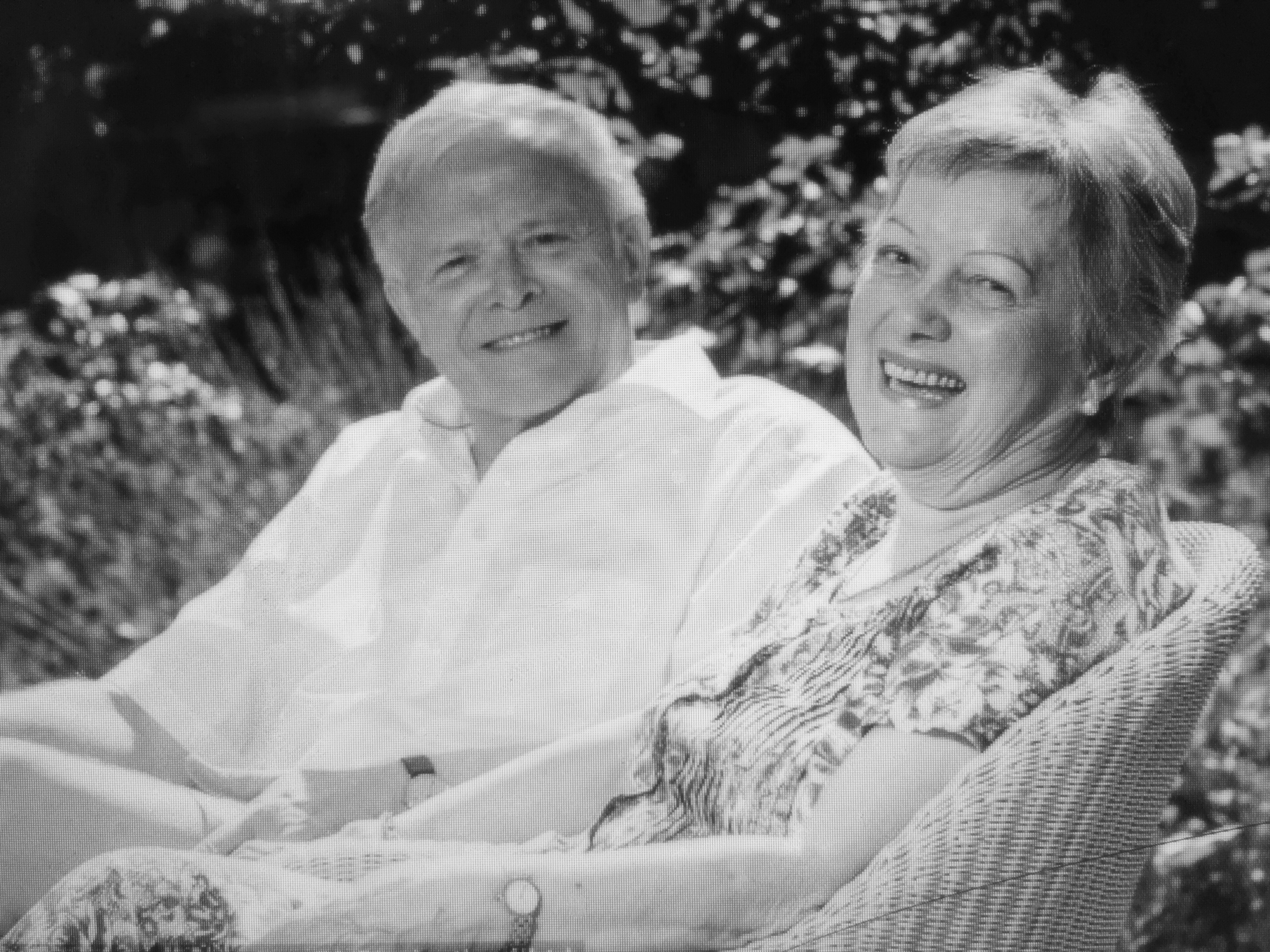
Nurse Pharoah and Husband 2"Dying is easy it's living that scares me." Cold Album -Anne Lennox

   On July 20, 2015, long time British Nurse Gill Pharaoh shared a dinner with her husband as they cruised down the Rhine. The next day, she entered a Swiss clinic. With her husband present, Nurse Pharaoh (in photo) voluntarily received a dose of a life-ending drug.

   Ms. Pharaoh was seventy-five. She was in excellent mental & physical health. "I only have a few aches and pains but I feel my life is complete. I'm ready to die," she said.

   Her explanation can pierce the hearts of caregivers everywhere. Gill spent her career caring for the frail elderly. She did not wish to become one of them. She felt so strongly about this that she took the ultimate step. 

   It is easy to condemn her decision & the laws that make it possible in some parts of the world. It is more difficult to seek to understand Pharaoh's choice.

   A new film portrays the life & suicide of the widely acclaimed author David Foster Wallace. In a two-page note Wallace left he offers a compelling analogy. Many of those who commit suicide, he writes, feel as if they are in a burning building. They must jump to avoid the agony of remaining.  

  Though Pharaoh also took her life her case is different & strange. Pharaoh saw a "building" she felt was on fire & decided not to enter it. She wanted to avoid the indignities of a compromised existence in the house of the elderly. She wanted to tell us that too many people are living too long in ways that burden others.

  Gill Pharaoh's career was a triumph of loving care. Did her choice to die tarnish her legacy, enhance it, or offer some other commentary worthy of reflection? 

-Reverend Erie Chapman

8 responses to “Days 267-271 – The Courage to Live…and to Die?”

  1. sbeng@att.net Avatar
    sbeng@att.net

    Erie: Caregivers that have worked in the medical establishment especially nurses, doctors etc. who have dealt with the care of the elderly must have thought to themselves at one time or another “is this what it is like to get old, do I want to live this long in this situation?” I have done my nursing in England and dealt with caring for the elderly and visited the geriatric hospitals there. Ms Pharaoh had seen and handled it all in her years of nursing and had done her job well. In this country I have been a Visiting Nurse for many years and I love to care for elderly and the Hospice patients. There is a lot of debate and talk about end of life issues and can the individual take their own lives when they are really sick. There is Palliative Care and Hospice Care available in the US. In Ms Pharaoh’s situation she was doing well.In UK which initially established Hospice Care do not allow the individual to take their own lives. As a Midwife I treasure new life – the newborn babies that I have helped to bring into this world. When the time comes for me to depart I leave my life in the hand of my Loving Lord who created me and He makes the ultimate decision when to take me home to eternity.

    Like

  2. Julie Laverdiere Avatar
    Julie Laverdiere

    When I read this my first reaction was “oh no”! I once had to face a life threatening illness and am now healed and cured. It was a struggle, but I wanted to keep on living and giving. And what was in my power I took control of. The rest was up to God. To take my life because of not wanting to face the future is not an option for me. I have taken care of a lot of elderly, and see the struggles they face, but also see the courage and determination they have to carry on. And, the courage of families to take care of them is also a blessing to see. So, I don’t understand this way to end a life, when we can face the struggle, and learn what blessings are all around.
    God has this all figured out for me, if I am willing to listen and respond.

    Like

  3. erie chapman Avatar
    erie chapman

    Thanks so much for your comment, Julie. I deeply admire the courage you have shown in dealing with your own situation.

    Like

  4. erie chapman Avatar
    erie chapman

    Thank you, Suan. You have such a long career and have seen so much. Be well.

    Like

  5. JVD Avatar
    JVD

    Today is my father’s birthday. It has been over six years since he left his body. My sister and I had many talks with him about what to do if he was unable to help himself. His eldest son was not ready to let go and wanted all efforts done to keep his body alive. That was not what father wanted and after discussions and group hugs and tears, our father left on his own terms. True to the quote, dying was easy for father and it was the living that scared him. He was proud of his independence and the freedom he felt. As the years went on his health and mobility started to fail. He looked around and said no to the poking and prodding of caregivers in different settings. He did not want this life. He was done. He wanted to go out with his head held high (so to speak).
    As I looked into Gill Pharaoh’s life I can imagine her helping hundreds of people during hospice care. Some may have wanted to hang on for a special event or birthday. Some may be pushed to endure their aggressive therapies because their family cannot accept death. Some may say, like Gill Pharaoh, that they have reached their expiration date. I have read many writings that talked about swamis who knew when they were going to leave their body. And they did so as predicted. Gill Pharaoh said she was not a religious person, but perhaps her death was a realization for her and the rest of us.
    David Foster Wallace was haunted by depression. The medications he took took a toll on him. Gone was the bliss of a clear mind and around him all he felt was a fog. His 2005 commencement address at Kenyon College is a heart warming and wrenching talk. Secular and Sacred. Serious and funny. Some parts too foreboding in retrospect. Everyone worships he says, project kindness, understand that the person next to you in line may be having a worse day than you. You can give of your self.
    So, like Robin Williams, with all things outwardly looking wonderful, inwardly the fog of depression took the light away. These were smart, intelligent and thoughtful people. The thought of life and its limitations became to much and the door was closed.
    My father did not take his life. He died with his family around him. That was his will. Just like his wife, my mother. She lost her will to live and died hours after she said she did not want to fight cancer anymore.
    If it is God’s will for my parents, whose will is it for Gill Pharaoh, David Foster Wallace and Robin Williams.
    They all wanted to rest in peace. God grant us peace. Live in Love.

    Like

  6. ~liz Wessel Avatar

    This is a thought provoking essay and timely in light of the recent and ongoing debate on assisted suicide. I agree, Erie, reading Gill’s story pierces our hearts, especially since she was in good health. This is the troubling factor in Gill’s situation. Her decision raises the concern about care of our elderly and the impact on quality of life. Our focus needs to shift to how to live a meaningful life in the latter stage of life as we sustain the often slow but continual loss of independence. Atul Gawande’s book “Being Mortal” provides an excellent exploration of this provocative question and offers new insights and innovations in healthcare.
    Many people hold on so tenaciously to life they are willing to endure incredible suffering and diminished quality of life for one more day. It begs the questions are we prolonging living or prolonging dying? Yet, those of us who have walked alongside others in the final stage of life have also witnessed death as a most sacred time and dying as a natural process and a part of life.
    The analogy of the burning building that Wallace described in his suicide letter is powerful and a heart wrenching image. If Wallace was literally in a burning building, most likely an alarm would alert and courageous firefighters or perhaps a heroic concerned citizen would risk their lives to come to his rescue. His decision points out the huge gaps in the availability of mental health services and on a deeper causal level the breakdown of humanistic caring connections in our society.
    Life is such a precious and sacred gift and it gives us pause to ponder… For many, our religious upbringing precludes any consideration of taking our own life. Sometimes easing suffering can be confused with euthanasia. Catholic social teaching and the Ethical and Religious Directives offers guidance in end of life care, which instructs that when a person is in pain and suffering the goal is comfort and pain medication can be given as long as the intent is not to hasten death but to ease suffering.
    There are no easy answers and I can only offer my perspective. Each person must search their own soul and I cannot judge.

    Like

  7. erie chapman Avatar
    erie chapman

    Another brilliant essay, JVD! You eloquence continues to bring light and love to the Journal. Thank you for sharing the stories of your mother and father. If this piece is about anything, it is about encouraging each of us not to pass harsh judgment on the honest decisions of others – whether they choose to die as did Gillian or choose struggle to the last moment, as do others.
    Thanks for adding further comments about Wallace and Robin Williams as well!

    Like

  8. erie chapman Avatar
    erie chapman

    Thank you so much, Liz. You have had so much more direct contact with the dying (living) than have I. “…are we prolonging living or prolonging dying?” That is the central question. Many times, of course, there is no “courageous choice” involved as in the case of those in persistent vegetative states or otherwise trapped for weeks on ventilators with no chance of recovery. This is the state no one ever says they want for themselves yet most do little to help others who have fallen into this condition.
    How can Mercy prevail in such circumstances?

    Like

Leave a comment