
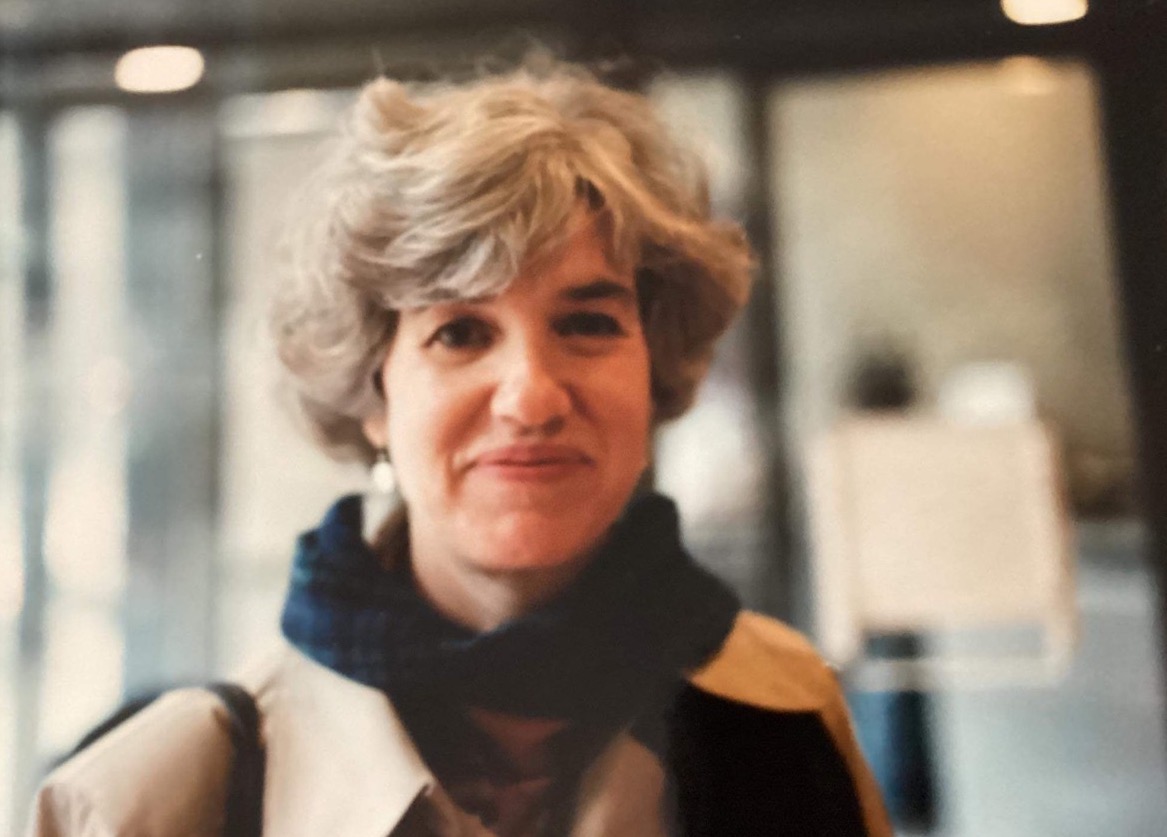
 Nine references to Tracy Wimberly appear in the best-selling Radical Loving Care. Taken together, they do not begin to describe her magical effect on others.
"I don't exactly understand her," one colleague shared, "but she certainly gets it."
His comment makes sense. The "it" Tracy has (like all whose presence brings peace) is mysterious.
On our Riverside & OhioHealth dream team in the '80s & '90s (& later at Nashville Baptist) Tracy was the most different. Working as a public health nurse when I first noticed her she seemed tender-hearted; unusual for a top leader in a giant health system. But, she is also tough-minded.
Great team members never fit the same mold. Tracy's uniqueness was fascinating.
The first time I noticed her she was soft-voicing a speech at an Episcopal gathering in Toledo. The calming impact was noticeable. When she spoke again at an open meeting of Toledo's Junior League her passion for service shined.
She deflected my first invitation to help lead a different Riverside Hospital (Toledo) but finally accepted.
The first hospital-based hospice in Ohio arose at Riverside Methodist (Columbus) shortly after I became President in 1983. It would not be there today except for two people. Community leader Stuart Lazarus proposed the idea & Tracy Wimberly shepherded a place of dying into life.
As with Jeff Kaplan, whose name should be on the McConnell Heart Hospital, Tracy Wimberly should be honored as co-founder of Kobacker House & hospice. Good leaders pick good leaders. Tracy picked Judith Lebanowski as the new director. (She did the same at Nashville Baptist picking Kim Fielden to lead nursing.)
Converting medical centers into healing cultures requires a Tracy. Tragically, her kind are rare & rarely noticed.
Hospice was groundbreaking. But Tracy's importance involved culture change.
The women's movement in medicine was nascent in 1984. Tracy, partnering with women in medicine & the community, founded the Elizabeth Blackwell Center (after America's first female physician.) Too humble to "take charge" she engaged an inclusive collaborative leadership model.
The caregiving environment at OhioHealth's flagship, Riverside Methodist, was okay in 1983. To take care of the people who take care of people we needed great.
Tracy improved quality of work life paralleling Mark Evan's leadership in human resources, Nick Baird's physician leadership, my working beside first line workers regularly &, later, Nancy Schlichting's leadership as COO.
Through Tracy, pocket-parks popped up on campus, rest-nooks emerged inside the massive buildings & elevators were renamed "Apple" & "Violet" bearing poems. Why? To help humanize the environment.
We called our caregivers, including doctors, "Partners," not employees. When partners thought up new ideas, we thought up ways to honor them. A new drinking station became "Charlie's Fountain" honoring a caregiver's suggestion.
Leaders like Tracy Wimberly awaken magic. Hospitals that frighten patients & are "just workplaces" to some become healing communities marshaling love to change the quality of life for hundreds of thousands.
Alchemically, Tracy's initiatives helped hospitals becomes hospitable; centers where you trusted that your loved ones would receive healing care because leadership cared for caregivers.
Tracy's office door carried one word: "Peace." For that one must embody loving presence.
"She listens with her whole self & rarely speaks," I wrote her dear husband, Andy, "When she does, you feel that for which we yearn: that you have been heard. She affirms, whether she agrees or not."
This is why I describe Tracy as the most caring, competent & compassionate leader I know.
She is a sister & the dearest of friends.
-Erie Chapman
Photo of Tracy – Andy Workum


 Journal of Sacred Work
Leave a reply to erie chapman Cancel reply