
 “If the only tool you have is a hammer, you tend to see every problem as a nail.” –Abraham Maslow
According to the Institute of Medicine, thousands of patients come to harm during the course of their healing due to preventable mistakes. The Joint commission suggests that communication is a top contributor in medical errors. Often caregivers find it difficult to speak up when they see unsafe practices such as clinicians taking shortcuts, breaking rules or lacking competence.
In a study conducted by Vitalsmarts called "Silence Kills" (2005), results showed that the ability of nurses to raise difficult conversations had a direct correlation with patient safety, quality of care, teamwork, employee satisfaction and turnover. In leadership there is no room for intimidation, coercion, bullying or disrespect as a means of influence. More often than not, errors result from a series of system failures that culminate in someone making a mistake.
Healthcare is evolving in a positive direction. Instead of focusing individual blame or a punitive response when a mistake occurs; organizations are working to develop cultures of safety. Scott Griffith suggests a collaborative Just Culture model that balances system design with accountability for behavior. He promotes an effective strategy of positive coaching that is supportive, compassionate and transparent. He encourages leaders to model behaviors that make it safe for others to disclose mistakes when they occur and to speak up about safety concerns.
Renown healthcare leader, Erie Chapman continually inspires us to approach our patients with authentic intention and to be open to the vulnerability that accompanies illness and suffering. "When deep need is met with a loving response it is a sacred encounter" (Chapman).
Leaders can begin by being vulnerable and admitting some of their own mistakes to cultivate an atmosphere of openness and trust among caregivers. This will allow the sacred to manifest in their relationships, as well. As Erie so wisely counsels, "the number one job of a leader is to care for the people who care for the patients."
Liz Sorensen Wessel RN, MSN
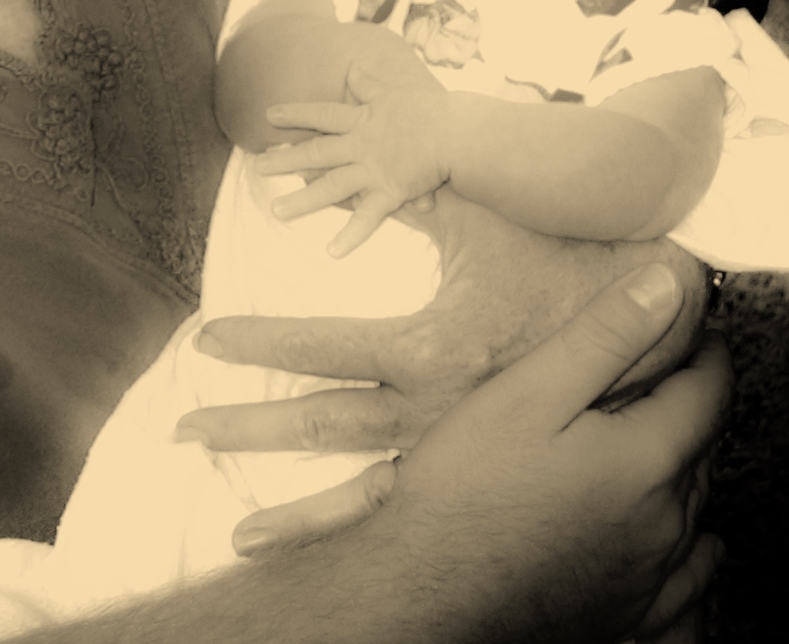
Photo: August 6, 2006 Rejie, Lee and grandma Wessel-3 generations


 Journal of Sacred Work
Leave a reply to sbeng Cancel reply